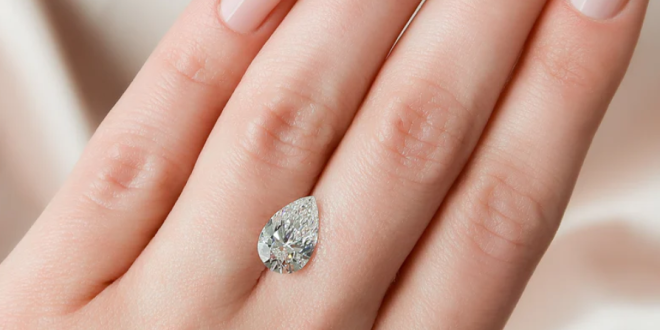
The second-hand luxury jewelry market is changing as four cultural shifts are beginning to intersect with one another in a very powerful way: sustainability, transparency, the democratization of luxury and generational value realignment. They are turning what has been a stigmatized market into a vibrant mainstream marketplace that’s challenging traditional retail and reimagining jewelry ownership.
The Sustainability Imperative
The mining of gems and precious metals like diamonds and gold are among Earth’s most ecologically destructive endeavors. This makes it incredibly hard for modern consumers to justify buying jewelry—consumer who should be your business are now making purchasing decisions that their grandparents never would have with guilt over environmental impact.
Pre-owned jewelry presents an elegant solution: Estate pieces satisfy beauty wants without bearing environmental costs of new mining. This reinterpretation transcends trends in social positioning – whereas previous generations heard “used” jewellery and thought slightly-less precious, today’s consumer thinks ethically sound conscious consumption. At Bkk Diamond, the pros report environmental rationale now factors into purchasing decisions on a regular basis.
The Transparency Revolution
The digitization makes market power untenable, as things have never been more transparent. Buyers can now see current prices, auction results, reviews and whether a vehicle has been certified so they are more informed when they enter into negotiations. This informed base does not tolerate hiding and secrecy, but it still insists on explanations.
Its accompanying logic is based on the belief: friendly and open dealers produce well-informed, happy buyers who are less resistant to buying again. And the paradigm shift affects sellers as well, who increasingly spend hours researching pieces before presenting them to dealers.
The Democratization of Luxury
Modern sentiments reject luxury as nothing more than a high-class status symbol, instead embracing democratized access to all economic classes. Pre-owned jewelry is ideally suited to serve that Josh Line-at-Target purpose—middle class customers can afford real(ly) Cartier and Tiffany for a fraction of retail prices.
“Luxury cycling” makes experiencing far more than you can afford when new possible for ever. Someone may “own” $50,000 worth over two decades while never investing more than $10,000 — enjoying luxury through circulation rather than accumulation. Today’s consumer wear their secondhand on their sleeve, boasting of how they are a savvy participant in the market vs. down and out necessity.
The Anti-Materialism Paradox
When anti-materialism gown up doesn’t lower luxury interest but reroutes it toward pre-owned markets. Wearing second-hand jewelry is an example of conscious consumerism—purchasing what you truly love, adhering to circular economy values, and displaying financial responsibility.
This generates dynamics where the anti-consumer trend is benefiting pre-owned luxury because it provides consumption that is perceived politically conscious and sustainable rather than mindless and wasteful.
The Instagram Effect
Social media blew luxury from the hundreds to millions, magnifying social signaling — but putting pressure on authentication. When jewelry surfaces publicly online, thousands weigh in on authenticity to nudge consumers toward verified pre-owned pieces from dealers like Bkk Diamond.
Estate pieces are more shareable than what is offered on retail floor, due to the history and design being one-of-a-kind. Influencer culture also makes circulation an ordinary part of life by showing that prestige comes from access, while forever ownership squanders the opportunity to wield or wear something ever again.
The Experience Economy Alignment
Secondhand markets also cater more closely to experience-driven values than conventional retail. Estate jewelry means more of a story — pieces have histories, previous owners, eras, history. The discovery process — hunting through dealers and fathoming styles — offers a satisfaction that sterile retail shopping can’t deliver.
It’s why selling jewelry to pay for experiences isn’t so much a rejection of luxury, but a new understanding of it — temporary ownership converted into an experience provides more lasting gratification than permanent ownership that all too quickly disappears in its own familiarity.
The Craft Appreciation Renaissance
The era of industrial production caused a renewed interest in handcraft. Vintage fine and estate jewelry from the Art Deco, Victorian or Edwardian era is a testament to workmanship you never see now. An appreciating consumer market is increasingly placing value in this superior craft, actually aging them into desire.
Bkk Diamond’s dealers tout craftsmanship and hand-constructed methods—framing secondhand as superior specimens of jewelry-as-craft, not commodity.
The Individuality Premium
Mass market hegemony spurs counterreaction in which the cult of individuality is itself “invigorated”. Virtually by definition, estate jewelry is more individual — for each piece will be unique in wear and, even if minimally or in hard-to-see ways, historical context. Putting on estate jewelry is like extremely rare close encounters of the duplicate kind — and that’s a promise retail can’t make.
This chimes with a consumer who sees jewellery as self-expression. “People want to express themselves as individuals, and wearing unique 1940s estate pieces is much more of an expression of individuality than walking around with what look like thousands of other people’s rings on your finger from the standard retail outlets.
The Trust Economy Transformation
Trust dynamics changed—trust in corporations fell, but trust in peer networks and transparent dealing rose. Consumers believe in peer reviews over advertisements and search deeply, turning to web communities. This is a powerful incentive toward honesty—bad reputations are hard to shake and last forever.
And ultimately, the most successful dealers earn that trust over hide rather than having it indemnified by badge alone.
Conclusion: The Converging Forces
Pre-owned luxury jewelry is not so much having a moment — it’s an alignment of cultural shifts that are in turn reinforcing each other. Sustainability makes pre-owned ethically preferable. Transparency makes information asymmetry untenable. Democratization makes luxury accessible. Anti-materialism drives conscious consumption. Instagram creates authentication pressure. Experienced economy aligns with narratives. Craft appreciation values older pieces. Individuality favors unique estates. Trust rewards integrity.
These culture-defining shifts will reinvent the luxury markets for generations. Second-hand jewellery is perfectly placed – sustainability without the sacrifice, luxury without the guilt, craft without the BS, individuality with immediate gratification. This is what explains why pre-owned has transitioned from margin to mainstream: because it delivers better alignment with how today’s consumers think about value, ownership and indeed luxury.