Industrial manufacturing is experiencing a massive shift toward serial production. As businesses seek to scale up their production capabilities, understanding the economics of metal additive manufacturing has become a critical priority. No longer restricted to niche prototyping, metal 3D printing is now a mainstream production method for aerospace, automotive, medical, and mold-making industries. This rapid evolution was on full display at the highly successful TCT Shanghai 2026 exhibition, which took place from March 17 to March 19, 2026. The event highlighted how next-generation technologies are actively lowering the cost-per-part barrier.
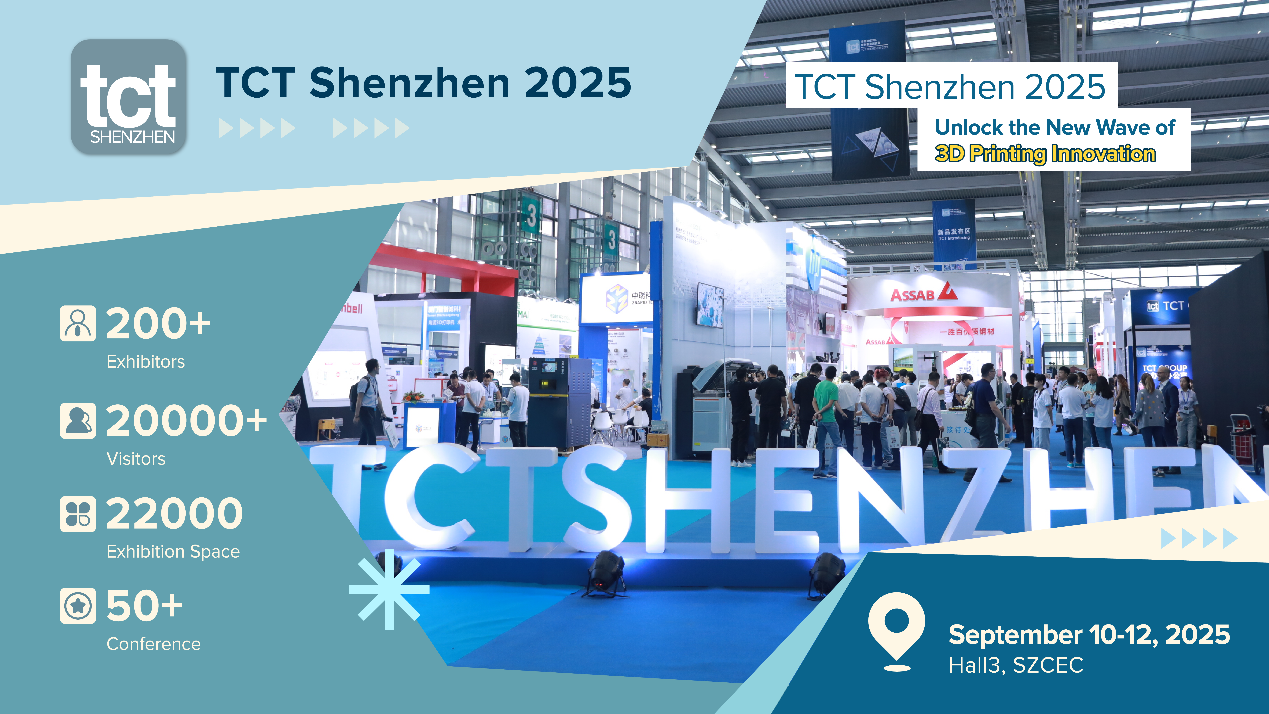
As professionals look forward to the upcoming Shenzhen edition scheduled for October 14 to October 16, 2026, navigating the cost structures of this technology remains paramount for procurement managers and design engineers. To help your organization make informed decisions, this guide breaks down the core variables influencing metal additive manufacturing pricing in 2026.
Raw Material Dynamics and Alloy Selection in 2026
The choice of metal alloy is one of the most direct and predictable cost drivers in additive manufacturing. Unlike traditional subtractive methods where material waste is high, metal 3D printing is highly efficient with material usage. However, the specialized spherical powders required for Powder Bed Fusion (PBF) and Directed Energy Deposition (DED) carry premium price tags. The physical properties of these powders—such as flowability, particle size distribution, and chemical purity—require rigorous quality control, which is reflected in their market pricing.
Common materials like Stainless Steel (316L) and Tool Steel are relatively cost-effective, making them popular for industrial machinery components and high-wear tooling. In contrast, aerospace-grade Titanium (Ti6Al4V), Nickel-based Superalloys (Inconel 718), and specialized Cobalt-Chrome alloys command significantly higher prices. Aluminum alloys sit in the middle, offering a lightweight profile but requiring careful processing parameters. During the recent TCT Shanghai 2026 event, exhibitors demonstrated new material formulation techniques that aim to reduce the price of titanium and copper powders, highlighting how the industry is working to make high-performance metals more economically viable for mass production.
Hardware Architecture and Throughput at the 3D Printer Expo
Machine depreciation and build time constitute a substantial portion of the overall cost per part. The architecture of the system being used directly dictates how quickly a part can be built, which in turn influences the hourly rate of the machine. At any modern 3D printer expo, the dominant trend is the rise of multi-laser systems. By leveraging configurations with 8, 12, or even up to 256 lasers working simultaneously on a single build plate, manufacturers can increase throughput exponentially and drive down the per-unit cost of large production runs.
However, high-throughput machines represent a substantial upfront capital expenditure. When evaluating systems at a leading industrial 3D printer expo, buyers must balance this initial investment against their projected production volume. A single-laser system may have a lower hourly operating cost, but its slow build speed means a complex aerospace bracket could take days to complete, racking up high cumulative machine-time costs. Conversely, a multi-laser system can print the same bracket in a fraction of the time, making the per-part cost significantly lower despite the higher machine rate. Organizations must carefully analyze their annual volume requirements to determine whether a high-performance machine or a standard industrial unit offers the best return on investment.
Post-Processing and Quality Assurance: The Hidden Expense Drivers
A common misconception among newcomers to metal additive manufacturing is that the process ends when the printer finishes its build cycle. In reality, post-processing can account for 30% to 50% of the total part cost. Because metal parts are welded to a build plate during the printing process to prevent thermal distortion, they must be wire-EDM or band-saw cut from the plate. Additionally, almost all metal 3D-printed parts require thermal post-treatment—such as stress relieving, hot isostatic pressing (HIP), or annealing—to eliminate internal residual stresses and achieve the desired mechanical properties.
Furthermore, surface finish requirements often necessitate secondary CNC machining, bead blasting, or chemical polishing. For critical industries like aerospace and medical implants, quality assurance adds another layer of cost. Non-destructive testing (NDT), such as X-ray CT scanning, coordinate-measuring machine (CMM) inspections, and mechanical testing, are vital to ensure part integrity. Many of the advanced automated post-processing and testing solutions that streamline these steps were a major focus at the spring 3D printer fair in Shanghai, and they will continue to be a key highlight for South China’s manufacturing hub at the next 3D printer fair in Shenzhen this October.
How Part Design and Orientation Direct the Bottom Line
The true beauty of additive manufacturing lies in the concept of “complexity for free.” Unlike traditional CNC machining, where complex geometries require custom tooling and prolonged setups, 3D printers can produce intricate lattices, internal cooling channels, and topology-optimized designs with ease. In fact, smart design can actively reduce costs. By using Design for Additive Manufacturing (DfAM) principles, engineers can consolidate multi-part assemblies into a single component, reducing assembly labor, inventory costs, and potential points of failure.
Part orientation and support structure design also play a decisive role in pricing. Support structures are necessary to anchor the part and dissipate heat, but they represent wasted material and require manual labor to remove. By optimizing the orientation of the part on the build platform, engineers can minimize the need for supports, reduce build height (which shortens print time), and maximize the number of parts nested on a single build plate. This level of optimization requires specialized engineering expertise, making design and preparation crucial factors in the final price of the component.
Navigating the Global Supply Chain with TCT Asia
As companies look to integrate these cost-saving strategies into their supply chains, keeping up with the rapid pace of technological innovation is essential. This is where TCT Asia serves as an invaluable platform for global decision-makers. As Asia’s premier event for additive manufacturing and 3D printing intelligence, the brand brings together the world’s leading equipment manufacturers, material suppliers, software developers, and service providers.
Following the resounding success of the Shanghai event in March, the next major milestone is TCT Shenzhen 2026 this autumn. By attending, design engineers, buyers, and operations managers can interact directly with the hardware, compare material specifications, and negotiate directly with suppliers to optimize their procurement strategies. Engaging with the global ecosystem through TCT Asia ensures that your business remains at the cutting edge of cost-efficient, high-performance manufacturing.
