In the global event industry, the operational window between two consecutive shows is often measured in hours rather than days. For a led screen rental company, the ability to rapidly strike a set, transport the hardware, and deploy it at a new location is as vital as the visual quality of the display itself. Logistical bottlenecks during transport and warehouse handling can lead to increased labor costs and missed deadlines. YES TECH has addressed these B2B pain points by developing a comprehensive logistics and transport ecosystem for the MAir series, focusing on mechanized handling and space optimization to enhance overall project efficiency.
Mechanized Transport: The Role of Specialized Vehicle Systems
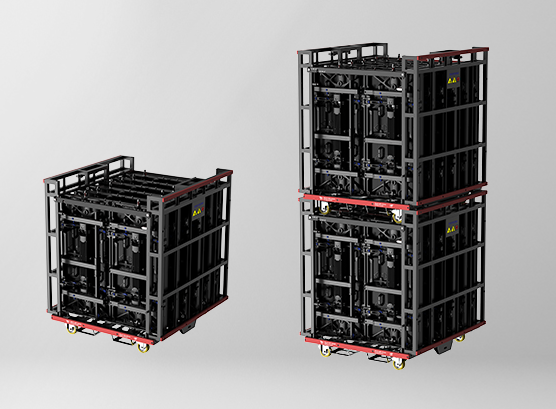
Traditional flight cases, while protective, often lack the density and handling speed required for large-scale video wall for events. To accelerate the transition from the truck to the stage, the MAir series utilizes a dedicated transportation vehicle system. Each specialized cart is engineered to hold six large-format cabinets securely in a vertical orientation. This design not only protects the precision-aligned carbon fiber frames but also allows for rapid visual inspection of the hardware during the loading process.
The engineering highlight of this system is the integrated bottom pin-lock mechanism. This feature allows technicians to secure the cabinets to the transport vehicle almost instantaneously, eliminating the need for complex internal strapping or individual case latching. For a rental led screen supplier, this mechanized approach reduces the physical labor required for high-frequency loading and unloading, effectively shortening the logistical cycle and allowing for faster equipment turnover between events.
Space Optimization and Stacking Logic in Global Logistics
Shipping costs and storage space are significant factors in the operational expenditure (OPEX) of a led screen supplier. The MAir transportation vehicles are designed with a stackable architecture, allowing for maximum utilization of vertical space in both sea containers and warehouse environments. By increasing the density of the cabinets per cubic meter, the system lowers the carbon footprint and transportation cost per unit.
From a structural perspective, these transport vehicles are built to withstand the vibrations and impacts associated with international transit. The integration of high-durability casters and reinforced frames ensures that the video wall for events arrives at the venue in a “ready-to-hang” condition. By minimizing the need for on-site calibration or structural adjustments caused by transit-related shifts, the system ensures that the technical crew can proceed directly to the led display installation phase, saving valuable on-site time.
Accelerating the Transition from Transport to Rigging
The synergy between the transport system and the installation hardware is a critical component of the MAir series’ efficiency. The cabinets are positioned within the transport vehicle at an optimal height and orientation for direct attachment to the hoisting bars. This “truck-to-truss” workflow minimizes the number of times a cabinet must be handled by personnel, reducing the risk of accidental pixel damage.
Furthermore, the quick-release wind-bracing system, which features a collapsible design, is engineered to fit seamlessly alongside the cabinets in the transport vehicle. This integrated storage logic ensures that all structural components—including the wind-bracing, hanging bars, and power cables—are organized and accessible. For a led display screen manufacturer, providing a cohesive logistical package is essential for supporting clients who manage complex, multi-city tours where any delay in the supply chain can have significant financial consequences.
Enhancing ROI through High Equipment Utilization
For a led screen rental company, the Return on Investment (ROI) is a direct function of how many days per year a piece of equipment is generating revenue versus sitting in a warehouse. A system that is difficult to transport or slow to install inherently limits the number of projects it can support. By reducing the time required for every logistical step—from warehouse pull-out to final striking—the MAir series enables higher frequency of use.
The modularity of the components further contributes to this efficiency. Because the modules and power boxes are interchangeable and the frames are designed for multi-size splicing, a company can rapidly reconfigure its inventory to meet the needs of different projects. This flexibility, combined with a 7680Hz refresh rate and high-transparency options, ensures that the hardware remains a high-demand asset across various market segments, including commercial displays, stadium concerts, and televised events.
Conclusion: Logistical Excellence as a Competitive Advantage
In the modern B2B display market, engineering excellence must extend beyond the pixel. The MAir series by YES TECH demonstrates that by optimizing the transport and turnover process, a manufacturer can provide significant operational value to its clients. Through the use of specialized transport vehicles, mechanized locking systems, and space-efficient stacking designs, the system provides a robust solution for the most demanding high-turnover scenarios. For organizations seeking to streamline their led display installation workflows and maximize their logistical throughput, choosing a platform built for operational speed is the most effective way to ensure sustainable growth and a superior return on investment.
